The Silent Heavy Burden: Living with Borrowed Money
We all know that sinking feeling in the pit of our stomach when the monthly statement arrives. You open your banking app, and the number staring back at you feels completely impossible to clear.
You work hard every single day, yet a large chunk of your paycheck instantly disappears into minimum payments. This daily reality is exhausting. It feels like you are running on a treadmill that keeps speeding up.
You are not alone in this fight. Millions of hardworking people wake up every morning carrying this exact same heavy load on their shoulders. They want to do the right thing, but the interest charges keep stacking up faster than they can pay them down.
Why You Feel Trapped (And Why You Need to Drop the Guilt)
When we try to find a way out, we often run into a wall of terrible advice. This misinformation traps people in a never-ending cycle of minimum payments.
Here is how bad information makes the problem so much worse:
- The "Close the Account" Myth: Many people panic and immediately close their cards. This actually hurts your credit score by shrinking your available credit, making future financial recovery much harder.
- Borrowing to Pay Borrowing: Friends often suggest taking out a high-interest personal loan to cover the card. This just moves the problem from one pocket to another.
- The "Just Ignore It" Trap: Some advice tells you to wait for the debt to expire. Ignoring the letters only leads to aggressive collection calls and ruined credit history.
- Unrealistic Frugality: "Stop buying coffee" is popular advice, but cutting out tiny joys rarely solves deep financial holes. It only makes you miserable.
The Hidden Cost on Your Mental Health
The real danger of a high balance is not just the math. It is what this situation does to your mental well-being and confidence.
Here is exactly how this burden quietly damages your daily peace:
- Sleep Deprivation: You lie awake at night calculating numbers in your head, wondering how to cover the next billing cycle.
- Relationship Strain: Money arguments become the default conversation at the dinner table. Financial secrets start to push partners away from each other.
- Imposter Syndrome: You might be doing great at your job, but inside, you feel like a failure because you cannot manage your own bank account.
- Decision Paralysis: The constant worry drains your brain power. You become so overwhelmed that you freeze and do absolutely nothing to fix the issue.

Your Action Plan to Reach Zero Balance
We need to stop feeling guilty and start taking smart action. The path to financial freedom is not magic, but it does require a clear, logical plan.
You do not have to fix everything overnight. Let us walk through the first three highly practical steps you can start applying today.
The Honest Reality Check: Getting Total Clarity on Your Accounts
You cannot fight an enemy you cannot see. Most people avoid looking at their full balances because it causes too much anxiety.
Behavioral economists call this the "Ostrich Effect." We bury our heads in the sand, hoping the bad news will simply disappear. But to take back control, you must put every single number down on paper.
Start by grabbing a notebook and a pen. Open every banking app and write down the name of the card, the total balance, the minimum payment, and the interest rate (APR).
Why This Works
When the numbers stay hidden in your mind, they feel like giant monsters. Writing them down turns them into simple math problems.
Our brains handle concrete facts much better than vague worries. Seeing the exact numbers lowers your cognitive load, giving you the mental clarity needed to make a plan.
Think of it like getting a medical checkup. The diagnosis might be scary at first, but it is the only way the doctor can write the correct prescription.
Your Actionable Task for Today
Create a simple table with four columns on a piece of paper. Fill it out completely before you go to bed tonight. Do not judge yourself while doing this; just collect the raw data.
Choose Your Payoff Strategy
Now that you know exactly what you owe, you need a system to attack the balances. Throwing random amounts of money at different cards will not work.
You need to focus your energy like a laser beam. There are two highly effective, scientifically backed methods to choose from.
The Avalanche Method (The Math Winner)
With this strategy, you organize your list from the highest interest rate down to the lowest. You continue paying the minimum on everything, but you throw every extra dollar at the card with the highest APR.
This approach is mathematically the smartest. It saves you the most money on interest charges over time.
Real-Life Scenario: Imagine you have two cards. Card A has a $2,000 balance at 24% interest. Card B has a $1,000 balance at 15% interest. You would aggressively pay off Card A first, stopping the bank from draining your wallet with that heavy 24% fee.
The Snowball Method (The Psychology Winner)
Here, you list your debts from the smallest balance to the largest, ignoring the interest rates completely. You pay the minimums on all cards, but attack the smallest balance with everything you have.
Why do experts love this? Because human beings need quick wins to stay motivated.
Research shows that when we achieve a goal quickly, our brain releases dopamine. This feel-good chemical gives us the energy to keep gong. Paying off a small $300 card completely feels like a massive victory, pushing you to tackle the next one.
Which One Should You Pick?
If you are a highly logical person who loves saving every penny, choose the Avalanche. If you get easily discouraged and need to see quick progress to stay motivated, choose the Snowball.
The best method is simply the one you will actually stick to.
Stop the Bleeding and Negotiate
You cannot empty a sinking boat if there is still a massive hole in the bottom. Before you start aggressively paying down your accounts, you have to stop adding new charges. This means making a hard rule for yourself today. Take the plastic out of your wallet and put it in a drawer.
Remove your saved payment details from online shopping apps. Make it slightly inconvenient to spend money, so you are forced to think twice before buying.
How to Talk to Your Bank
Many people think their interest rate is set in stone. This is a huge misconception. Banks actually want you to succeed in paying them back. If you default, they lose money. Because of this, credit card companies are often willing to negotiate your terms.
You just have to be brave enough to ask. Call the customer service number on the back of your card.
A Simple Script You Can Use
When the representative answers, you can say something like this:
"Hi, I have been a loyal customer for a while, but I am currently struggling with the high interest rate on my account. I am looking at balance transfer options with other banks, but I would prefer to stay with you. Are there any hardship programs or lower APR options available for me today?"
The Worst They Can Say is No.
Even if they refuse, you have lost nothing but ten minutes of your time. If they say yes, you could instantly shave hundreds of dollars off your future interest charges.
The Power of a Balance Transfer
If your current bank refuses to help, you can look into a balance transfer card. These cards often offer a 0% introductory interest rate for 12 to 18 months.
This gives you a golden window of time. Every dollar you send to the bank goes straight to the principal balance, rather than paying off heavy interest fees.
Just remember the golden rule of balance transfers: You must commit to paying off the full amount before the promotional period ends. Otherwise, the high interest rates will return, and you will be right back where you started.
Building a Strong Foundation for the Future
Getting out of a deep financial hole is tough, but it is entirely possible. By facing the reality of your numbers, choosing a strategic payoff method, and stopping new debt, you take back your power.
You are completely capable of fixing this. It requires patience, discipline, and a little bit of grace for your past mistakes. Focus on small daily habits, and the big results will eventually follow.
Advanced Tactics to Accelerate Your Debt Payoff
Once you have your basic plan in place, it is time to speed up the process. Paying minimums will keep you trapped for decades.
We need to aggressively attack the principal balance. To do this, you need to use a few expert-level strategies that banks rarely tell you about.
These advanced methods will help you clear your balances months or even years ahead of schedule. Let us explore exactly how you can turbocharge your financial recovery.
The Power of Increasing Your Cash Flow
You can only cut your expenses down to a certain point. Eventually, you still need to buy groceries and pay for electricity.
However, your ability to earn extra income has absolutely no limit. Bringing in extra money specifically for your debt is the fastest way to break free.
I call this the "Temporary Sprint" approach. You do not have to work 80 hours a week forever.
You just need to push hard for a short season to clear the heavy balances. Here are a few highly practical ways to find extra cash this week:
- The Declutter Challenge: Walk through your home and gather items you have not used in six months. Selling old electronics, furniture, or clothes on local marketplaces can instantly generate hundreds of dollars.
- Monetize a Simple Skill: Offer pet sitting, lawn care, or freelance virtual assistance in your spare time. Send every single dollar from this extra work straight to your bank app.
- Negotiate Your Fixed Bills: Call your internet, phone, and insurance providers to ask for better rates. Take the monthly savings and apply them directly to your payoff plan.
Restructure What You Owe (The Consolidation Strategy)
Sometimes, managing five different payments is just too chaotic. A great advanced strategy is to combine all your small debts into one single, manageable payment.
This is known as a debt consolidation loan. Instead of paying 25% interest to multiple credit card companies, you take out a personal loan from a local credit union.
Imagine you owe $10,000 spread across four different cards. The interest charges alone are draining your monthly budget.
If you get a personal loan at an 8% interest rate, you use that money to pay off the four cards completely. Now, you only have one single payment to make each month.
More importantly, a massive portion of your monthly payment now goes toward the actual balance, not just bank profits. This simple move can shave thousands of dollars off your total repayment cost.
Just remember one absolute rule: You must lock your old cards away. If you consolidate your debt and then start using the empty cards again, you will double your financial trouble.
Automate Your Success to Prevent Relapse
Human willpower is naturally weak, especially when we are tired or stressed. If you rely on manually transferring money every month, you will eventually miss a payment or spend the cash on something else.
The secret to long-term wealth is removing human emotion from the equation entirely. You must automate your payoff strategy.
Log into your online banking portal today and set up automatic transfers. Schedule the money to move exactly one day after your paycheck hits your account.
If the money leaves your checking account before you even see it, you cannot accidentally spend it. Treating your debt payoff like a non-negotiable mandatory bill guarantees your success.
How to Maintain Total Financial Freedom Forever
Getting out of the hole is only the first half of the battle. Staying out of the hole requires a completely new set of financial habits.
To protect your hard work, you need a financial shock absorber. This means building a starter emergency fund immediately.
Aim to save at least $1,000 in a separate, hard-to-reach savings account. Life will always throw unexpected surprises at you, like a flat tire or a broken refrigerator.
If you do not have cash savings, you will be forced to swipe your plastic again. An emergency fund is your ultimate defense shield against future financial stress.

Dangerous Traps That Will Destroy Your Progress
When people get desperate to fix their money problems, they often rush into terrible decisions. Making the wrong move can easily set you back several years.
You must protect your credit score and your mental health during this journey. Here are five massive mistakes you absolutely must avoid.
1. Closing Your Accounts Out of Anger
Many people get so mad at their banks that they close their accounts the second they reach a zero balance. This feels great emotionally, but it is a terrible mathematical decision.
A large part of your credit score is based on your "credit utilization ratio." This is the amount of money you owe compared to your total available credit limit.
When you close a card, your total available limit shrinks instantly. This makes it look like you are maxing out your remaining cards, which crushes your credit score.
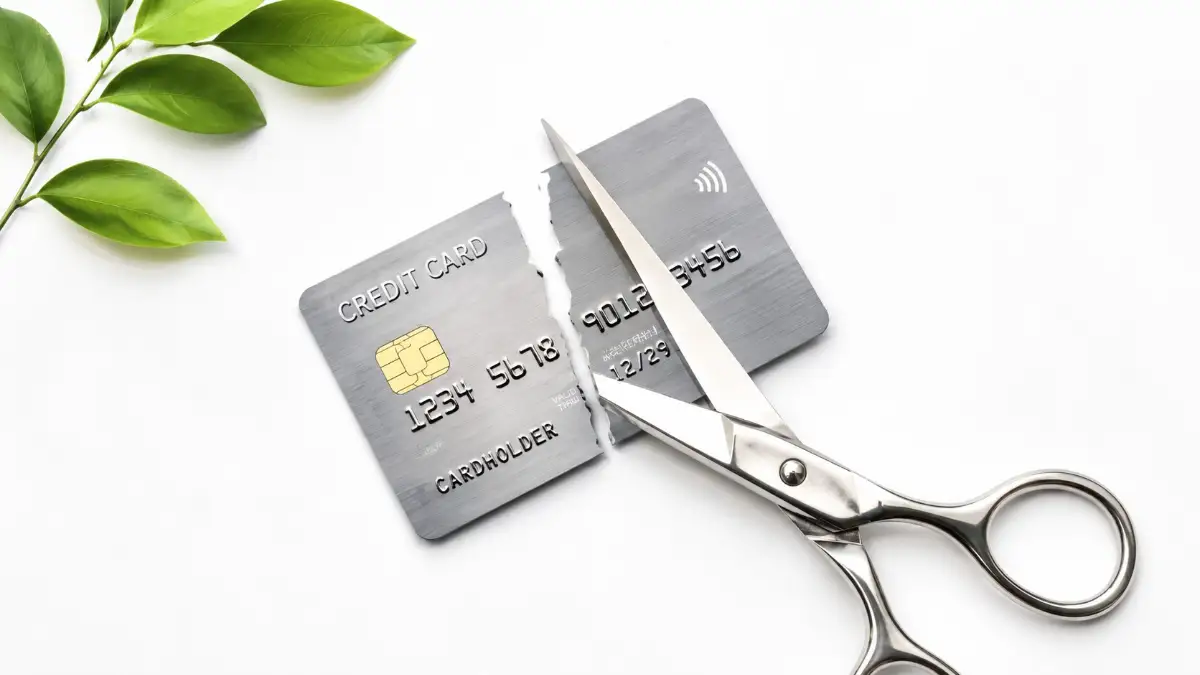
Instead of closing the account, simply cut the physical plastic into pieces. Let the account stay open with a zero balance to naturally boost your credit profile.
2. Raiding Your Retirement Savings
When the pressure gets too high, people often look at their retirement accounts as a quick escape hatch. Cashing out your 401(k) or pension early is one of the worst financial mistakes possible.
First, the government will hit you with massive early withdrawal penalties and heavy taxes. You might lose up to 30% of your money before it even reaches your bank.
Second, you steal from your future self. You lose decades of compound interest that would have kept you safe in your old age. Never sacrifice your long-term survival for a short-term emergency.
3. Trusting "Quick Fix" Settlement Scams
You have probably heard radio ads promising to "settle your debt for pennies on the dollar." These companies prey on scared, desperate people.
They usually tell you to stop paying your bills entirely and send the money to them instead. This intentionally destroys your credit score.
While they hold your money, the banks will hit you with massive late fees and send aggressive debt collectors to your home. You can negotiate your own settlements directly with your bank for free, without paying a shady middleman.
4. Co-signing or Borrowing from Family
Borrowing money from family members might seem like an easy, interest-free solution. In reality, it mixes money with love, which is a highly toxic combination.
If you miss a single payment, Thanksgiving dinner suddenly becomes incredibly awkward. Resentment builds up quietly, and relationships are often destroyed forever over a few thousand dollars.
Keep your financial struggles strictly between you and your bank. Do not drag your loved ones into the mess.
5. Extreme Budget Burnout
When people get motivated to pay off their balances, they often cut every single source of joy from their budget. They stop eating out entirely, cancel all subscriptions, and refuse to socialize.
This extreme deprivation works exactly like an extreme crash diet. You might last for three weeks, but eventually, you will break down and go on a massive spending binge.
Sustainable financial health requires balance. Give yourself a tiny amount of "fun money" every month so you do not feel totally miserable while paying down your balances.
Your Journey to Permanent Financial Peace
Taking control of your finances is one of the most empowering things you will ever do in your lifetime. It will not always be easy, but the peace of mind waiting for you at the finish line is entirely worth the effort.
You no longer have to wake up with that heavy, sinking feeling in your chest. By facing your numbers honestly and following a strict mathematical plan, you have already taken the hardest step.
Remember that progress is rarely a perfectly straight line. You might have a bad month where an unexpected expense throws you off track.
Do not beat yourself up if you make a mistake. Forgive yourself quickly, adjust your budget, and get right back on the path.
Every single extra dollar you send to the bank is a tiny brick in the foundation of your future wealth. Keep pushing forward, stay incredibly disciplined, and watch as your balances finally drop to zero.